






Sophie's Story | Lucky


Sophie Bridger speaks so apathetically it surprises anyone unfamiliar with her.
She recounts her surgeries with detached exactness. And yet, when she thinks of her chaotic early years, one unexpected feeling emerges: luck.
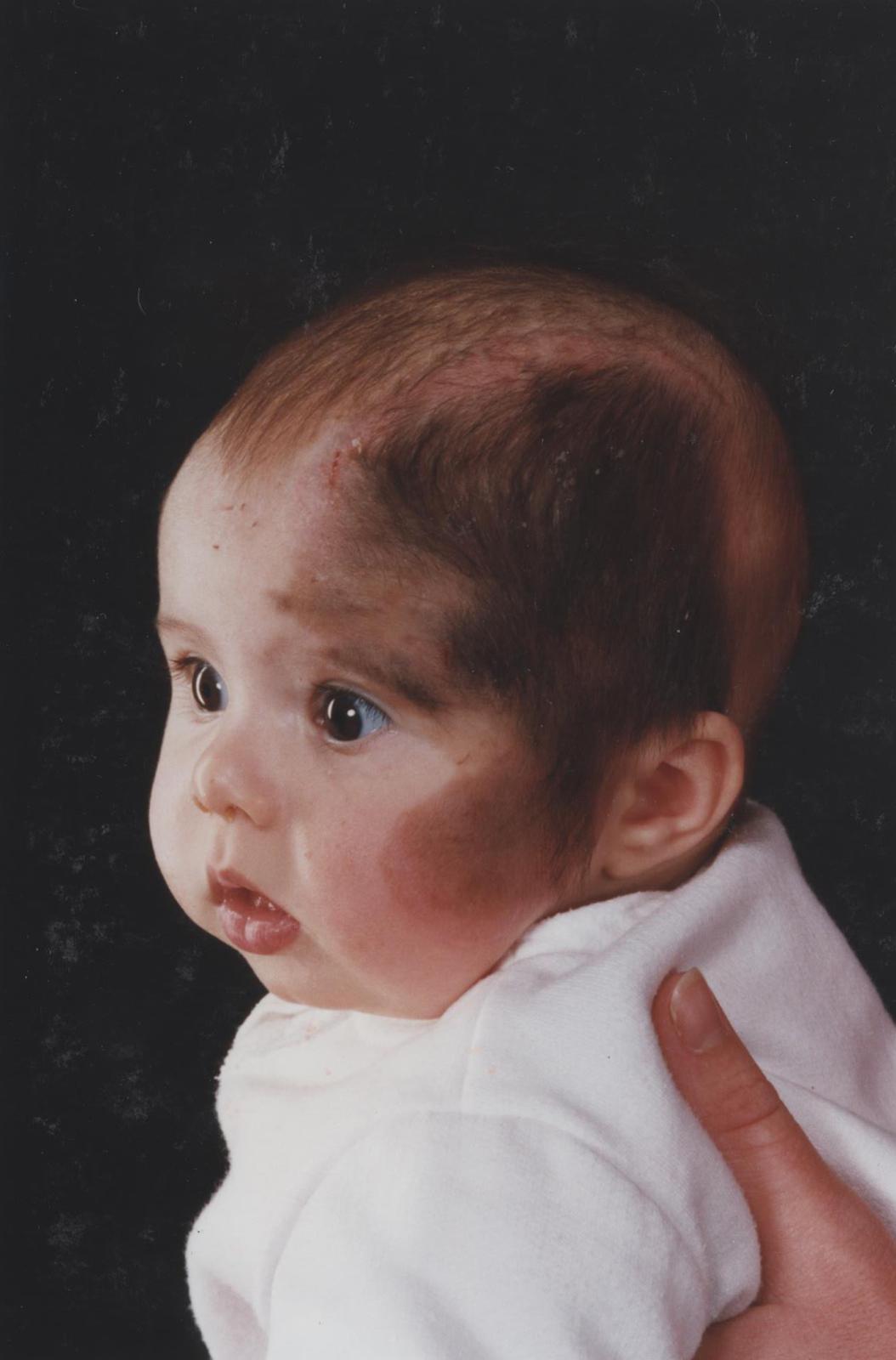
“I was born with Congenital Melanocytic Naevus, or CMN Syndrome. It’s a mosaic disorder caused by genetic mutation and affects around one in 20,000 people. When I was born, there was barely any research into it. There just wasn’t the knowledge there is now.”
CMN is a hairy birthmark rather than the red type people often think of. Sophie’s was on her face. She has six others elsewhere on her body. From six weeks old until she was 15, hospital became part of the rhythm of her childhood.
“I was treated at Frenchay Hospital from about six weeks old until I was 15, when I was finally discharged. The treatment was all surgical. I’d be in hospital pretty much every year for an operation. Each time involved pre-op appointments, the surgery itself and then follow-ups.”
There is something almost matter-of-fact in the way she says it. Annual surgery. General anaesthetic. Recovery. Repeat.
Her most significant operation came when she was eight.
“When I was eight, I had a larger operation where skin was taken from my stomach and grafted onto my face. I was one of the first people to have that particular approach for CMN. At the time, they didn’t fully understand the aftercare, so the graft didn’t take as well as it should have. That’s why the skin is a slightly different colour. Now the treatment is exceptional and far more advanced.”
If she had been born a few years later, the scar might barely be visible. The research has moved on. Great Ormond Street Hospital is now the main hub for CMN research, led by Professor Veronica Kinsler and her team. Babies are given MRIs early on. The neurological implications are better understood. There is real progress in tackling the rare and aggressive melanoma risk associated with the condition. The latest research has passed animal testing.
“There’s now a charity called Caring Matters Now, which runs campaigns like ‘How Do You C M(e) Now?’ They’ve had billboards across London, including the Oxo Tower. It’s incredibly exciting because it feels like there’s real progress towards a cure.”
She says that word “cure” carefully. Not grasping at it. Just acknowledging that something tangible is happening.
And yet, when she speaks about her childhood, the hospitals do not dominate the memory.
“As a child, I never felt like I was going to hospital to fix myself. Going into hospital felt normal. It was just something I did every year. The unit was new, there were TVs and a games room, and I’d see my surgeon who wore scrubs that looked like pyjamas. My parents never made it a big deal.”
Looking back, Sophie recognises how much her mum’s quiet presence shaped those early experiences. Her mum made sure she felt safe, distracted her with games or books, and celebrated small victories without ever making her operations feel like a defining moment.
“I’ve got three older brothers, so it was just, ‘She’s got another operation,’ and that was that. But they were protective in their own way – teasing me to toughen me up, but always making sure I wasn’t scared or alone. They’d sit with me, make me laugh, or sneak me treats when I needed it. I always knew there would be a set number of operations over a certain number of years. It wasn’t open-ended. I think that helped.”
There is luck in that, too. In parents who refused to let her syndrome become her identity. In a mum who nurtured and soothed, and in brothers who combined care with humour and protection. In a home where resilience wasn’t shouted, it was quietly lived.
Adolescence, of course, complicated things.
“As a teenager, my feelings shifted slightly. I started to think that maybe the first thing people saw was my face and that it was ugly, and that maybe they wouldn’t be attracted to me because of it. That thought would creep in from about Year 8 through to college.”
It is an honesty that lands softly but heavily. The internalisation of difference. The invisible weight of it.
“But I was lucky to grow up in a small town where everyone knew me. My friends say they don’t even see it anymore. Even if that’s true, you still feel it internally at times.”
Over the last seven or eight years, something has shifted again.
“I’ve really grown into my confidence. My girlfriend has been incredible in reinforcing that. She knew nothing about me before we met, had no prior warning, and it didn’t affect anything. It shouldn’t matter, but when you’ve grown up with that insecurity in the back of your mind, it means a lot.”
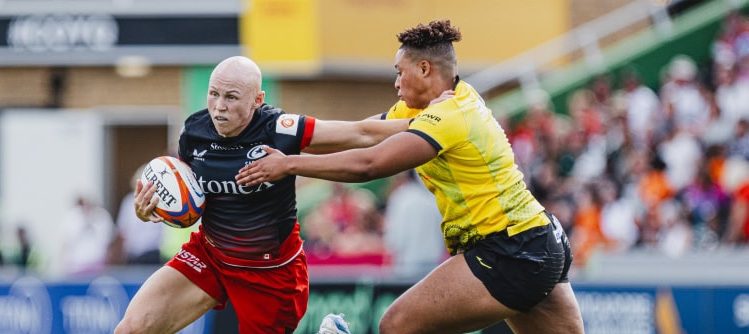
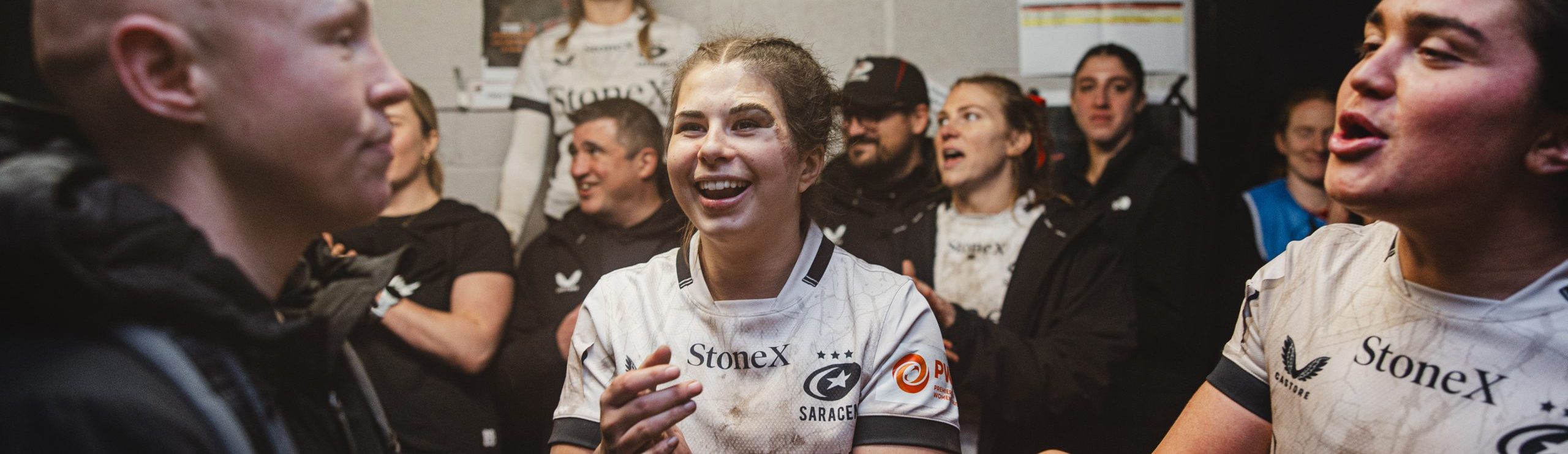
Rugby, too, has played its part. At Saracens, and long before that, it offered a unique environment which appealed to Sophie.
“Rugby has been a safe haven. It’s not always outwardly supportive (people take the piss out of everyone) but in a strange way that makes it equal.”
She played with boys for 12 years growing up. If surgery took her away for part of a season, messages would arrive. Cards. Chocolate. She would still go to the club to watch her brothers play and people would check in. It felt like family.
“That balance-built confidence,” she says now. “Looking back, I realise how intentional that must have been.”
“There have definitely been moments of ‘Why me? Why do I have to look different?’ But reflecting now, I can see how much it’s shaped me.”
One moment in particular still catches her.
“Last season, a young girl with CMN asked for my signature. We didn’t speak about it directly, but there was a mutual understanding. That moment made me emotional. You don’t meet many people with it, and to know she could see someone like her playing professional rugby meant everything.”
There is another choice Sophie could make. Further surgery. Another graft. Months away from the game. Specialist make-up to conceal the difference day to day.
“But it’s part of me. I could wear specialist makeup to hide it, but then I’d take it off at the end of the day and still be me. I don’t want to feel like I’m living two lives. It’s my face. It’s my story.”
That acceptance feels hard-won, but not heavy. More like a settling.
“If I could say one thing to a younger person with CMN, it would be to embrace it. The more you try to hide it, the more power it has over you. Yes, people will stare. Yes, some will make comments. But most of the time it doesn’t come from a bad place. It’s an opportunity to educate. Use it as a superpower. People remember you. If you carry it with confidence, it stops being a big deal because you’ve shown that it’s not a big deal to you.”
When she watched the announcement about the latest research breakthrough, she felt emotional again. Not for herself alone, but for the babies now scanned early. For the families with more information than hers had. For the possibility that targeting affected cells directly might one day remove the risk altogether.
“This is probably my biggest passion now. For the first few years of being in a professional environment, I didn’t feel ready to speak about it. Now I do. I think that’s growth. I’m comfortable in who I am. I’m proud of it.”
She pauses, then returns to that word that has quietly shaped her story.
“I’m lucky; lucky with my family, lucky with my partner, lucky with the communities around me.”
Luck is an interesting thing. It does not erase surgery. It does not remove risk. But sometimes, it lives in the people who sit beside hospital beds. In teammates who send chocolate. In a small town that sees the person before the scars.
And sometimes, it lives in the moment a young girl looks up, recognises herself in you, and realises that she, too, might be just fine.
Sophie Bridger is one in 20,000. She had been chosen. That is lucky.