







Louise McMillan's Story: Grit.


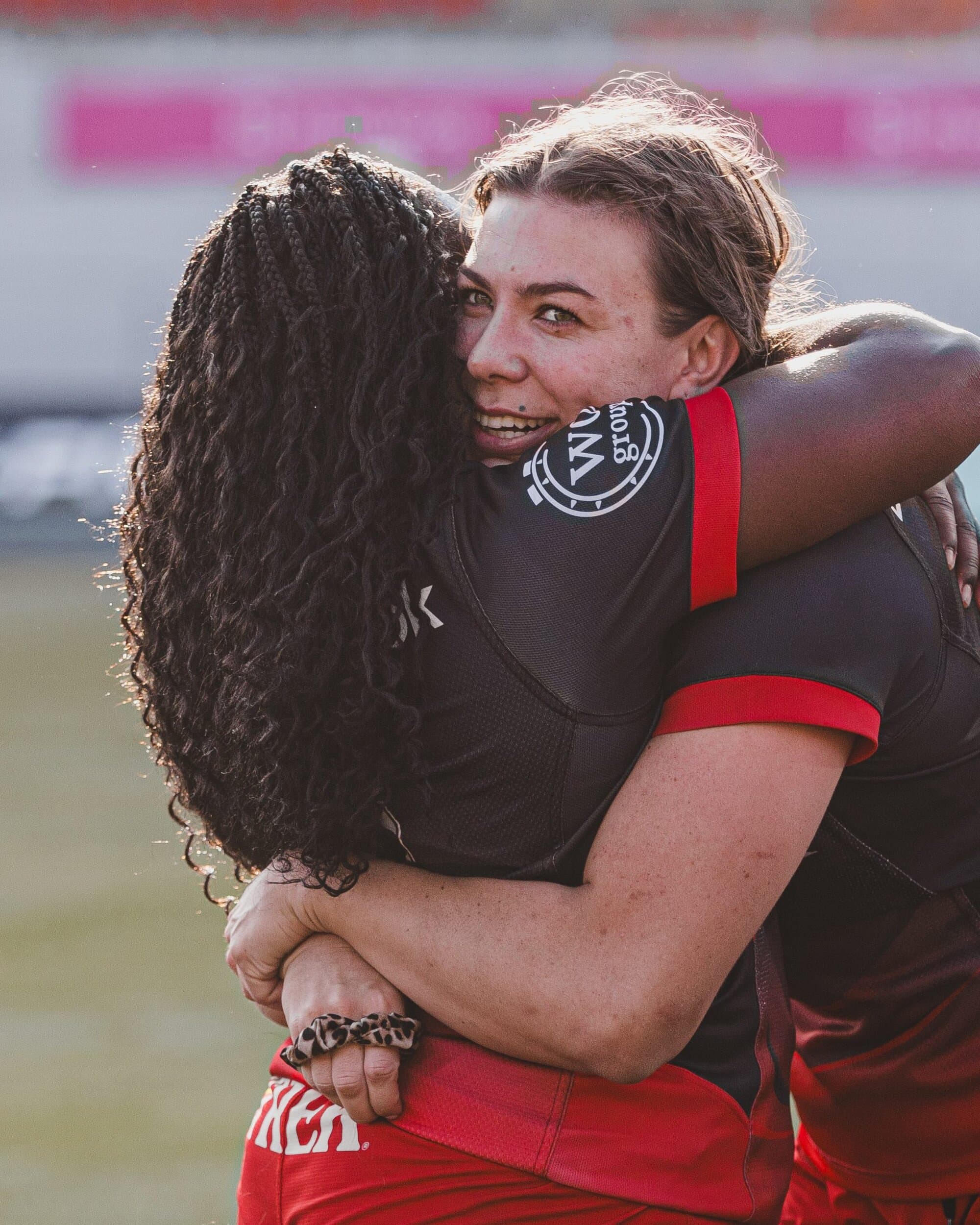
Grit doesn’t usually arrive in big moments. It builds quietly, in the in-between; in the sessions no one sees, in the days where nothing changes, in the decision to keep showing up anyway.
Louise McMillan has spent a long time there.
522 days have passed since she last represented Scotland. Long enough for perspective to settle in. Long enough for the edges of it all to soften, but not disappear.
“As you probably know, I’ve felt every emotion under the sun,” she says. “I was even joking with some of the girls because I’d said I’d never play for Scotland again.”
It sounds almost throwaway now. It wasn’t then.
“It’s definitely been a full circle thought process, and I’m now in a place where I’m really excited to go back in. I’m excited to see the girls again, and excited to have the chance to put my hand up and show what I’m capable of. At the same time, I need to acknowledge that it’s been a really tough year, not just for me, but for the people around me who’ve supported me. It wasn’t just about rugby, it felt very personal and very isolating at times.”
I’m also proud of how I’ve handled it. I don’t know if ‘healing’ is too dramatic, but it hasn’t been as simple as always wanting to go back.”
For a while, it didn’t feel like something to go back to at all. An Instagram post, shared after missing out on the World Cup, was read by many as a farewell.
“That post was really just about acknowledging that I hadn’t been selected for the World Cup, thanking my friends and family, and recognising the journey I’d been on. I wanted to show self awareness and be honest about where things were at with that coaching group. At the time, it felt like my journey had come to an end in that environment.
But it wasn’t necessarily me retiring, it was more about closing that chapter properly.”
If that felt like an ending, the period before it had been harder still.
“When I got dropped, I actually found the Six Nations period harder than the World Cup because I still had hope. I moved back to Scotland, trained with the under 20s, and did everything I could to get back in. That hope was probably the hardest part. It left me really low. I won’t go into specifics about coaches, but the way it was handled felt very personal. Things like unanswered messages and hearing things second hand were tough.”
The impact went beyond rugby.
“It made me question my value as a person, not just as a player, and that’s something I’d never experienced before. You expect to doubt your performance at times, but I’d never doubted myself as a teammate or a person until then.”
It is the kind of experience that lingers. That reshapes things. Which is why what came next mattered so much.
At Saracens, there was no big reset moment. No dramatic turning point. Just a different environment, and the space to rebuild.
“That’s why Sarries was so important for me towards the end of last season. Being voted Players’ Player meant so much because I genuinely didn’t believe I was a good enough teammate or friend anymore.”
Recognition, from those around her, began to restore something that had been knocked.
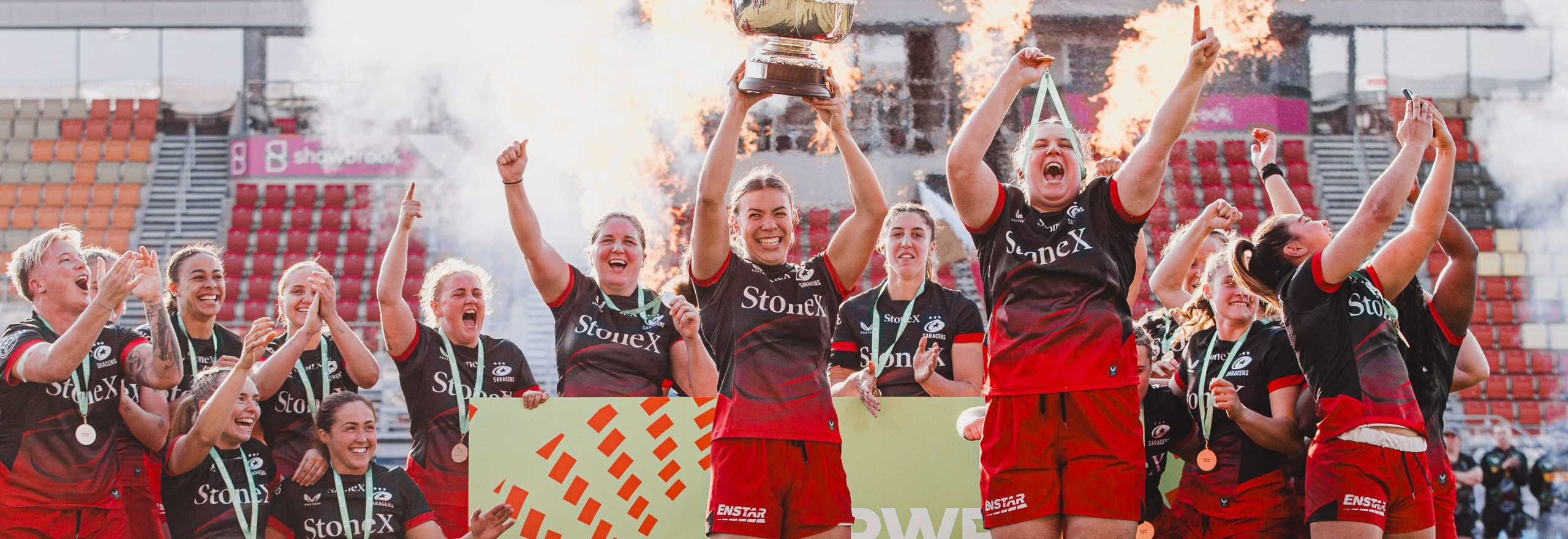
“Then getting the opportunity to captain in the cup helped rebuild my belief in my rugby. I owe so much to the club, the team and the coaches for investing in me at a point where I was really low.” I went into that cup season just thinking I’d try one session, and it ended up being exactly what I needed. The environment was just about enjoying it again.”
Enjoyment in rugby had become unfamiliar. Now, it was central again.
“Turning up because you love it, not because it’s your job or because of pressure, was probably the biggest lesson for me. It reminded me why I started playing in the first place.”
Around the same time, life beyond rugby began to take shape.
“Getting a job alongside starting the cup pre season was actually really important for me. It shifted my priorities completely and allowed rugby to become something I do because I enjoy it, rather than something that defines me.”
It changed the lens.
“My only real aim was to have fun. I took away all expectations and pressure. When the international players came back in, I just saw myself as someone playing rugby as a hobby again. I didn’t expect to be selected, but at the same time I know how hard I’ve worked. I’ve always been someone who puts in the work, and that’s something I’m really proud of.
I didn’t just sit back and wait for things to happen, I’ve been consistently working, doing extras, and making sure I’m in the best shape possible.”
There is a steadiness to that. A refusal to drift.
“I think I do carry some trauma from my Scotland experience, where it felt like years of hard work and sacrifice weren’t rewarded. That left me feeling like I had no control over outcomes. So now, when things are going well, it almost feels unfamiliar, but in a good way.It’s nice to feel like the extra work, the late sessions, the effort alongside a full day of work and training, is actually contributing to something again.”
And then, the call.
“When I got the phone call, the instant feeling of joy and wanting to tell my friends and family was probably the confirmation I needed that this is the right decision.”
No grand speeches. No overthinking. Just instinct.
For all the distance, all the doubt, all the time spent wondering where it might lead, the response was immediate.
This mattered.
Now, as she prepares to step back into the Scotland environment, there is a sense of readiness that feels different to before. Less about proving, more about understanding.
The last 522 days have not been defined by a single moment, but by many; the quiet ones, the difficult ones, the ones where continuing was the only real choice.
And in the end, that is what has carried her back.
Not noise. Not luck. Just the simple, stubborn decision to keep going. Grit.